

1. The case of Executive Secretary Mendoza v. Pilipinas Shell Petroleum Corporation (G.R. No. 209216, February 21, 2023) is now of immediate practical relevance because of the national energy emergency declared under EO 110 on March 24, 2026.
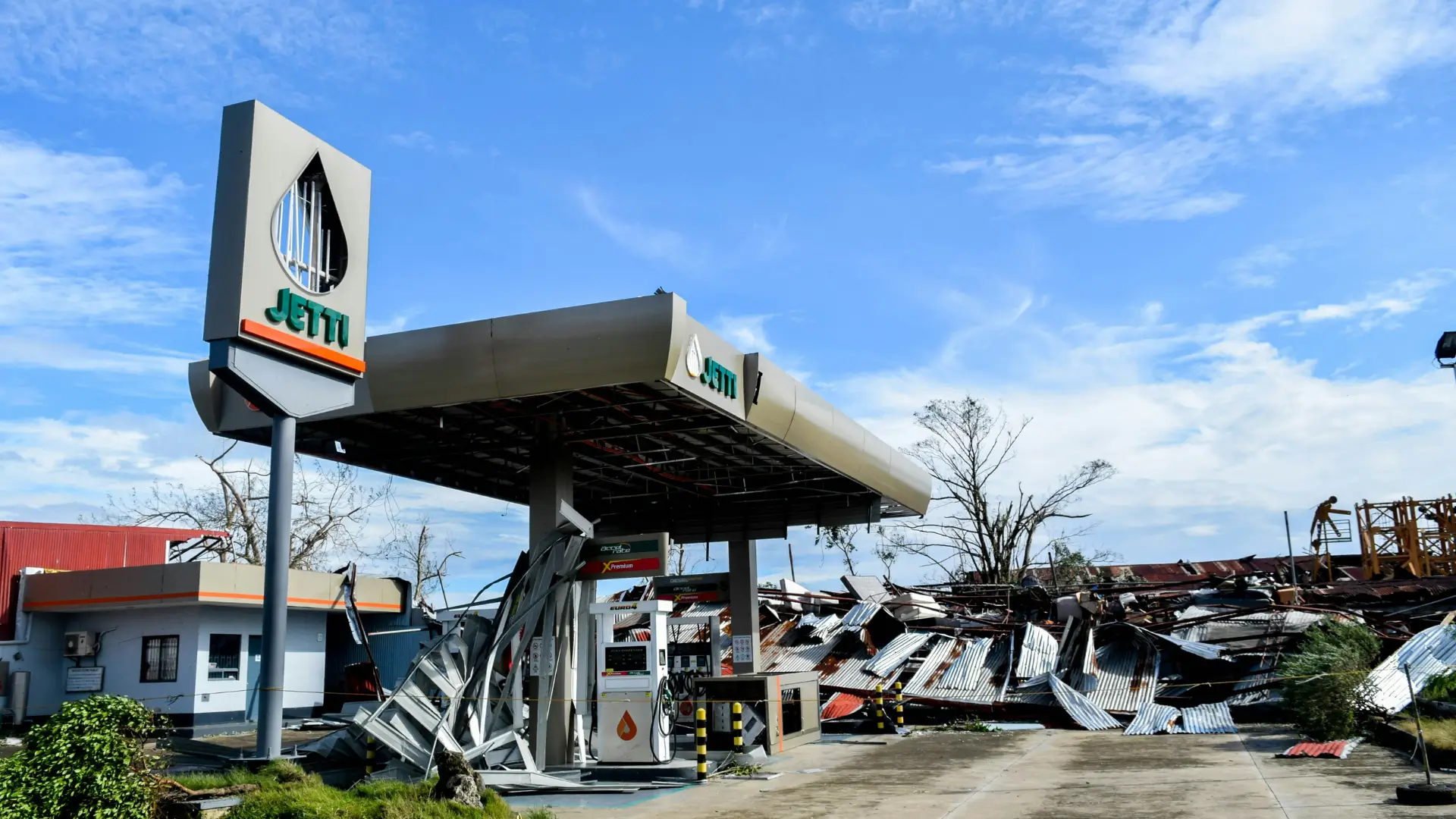
2. The case arose from Typhoons Ondoy and Pepeng, which ravaged Luzon in September and October 2009, leaving nearly one thousand dead. President Gloria Macapagal-Arroyo declared a state of calamity through Proclamation No. 1898 on October 2, 2009, and shortly after issued Executive Order No. 839 directing oil companies to freeze their retail prices for petroleum products during the emergency. EO 839 rested on Section 14(e) of the Downstream Oil Industry Deregulation Act of 1998 (Republic Act No. 8479), which authorizes the DOE, in times of national emergency when the public interest so requires, to temporarily take over or direct the operation of any person or entity engaged in the oil industry. Pilipinas Shell filed a petition for prohibition, mandamus, and injunction before the Regional Trial Court of Makati challenging both EO 839 and Section 14(e) as an unconstitutional delegation of emergency powers to the executive. Two days after the RTC granted a temporary restraining order, President Arroyo issued EO 845 lifting the price freeze. The constitutional question about Section 14(e) itself remained alive despite the mooting of EO 839, and Pilipinas Shell amended its petition into a petition for declaratory relief seeking a declaration that Section 14(e) was void. The RTC granted it and declared Section 14(e) unconstitutional. The Court of Appeals affirmed. The government elevated the case to the Supreme Court.
3. The core constitutional problem was this. Article XII, Section 17 of the Constitution authorizes Congress to empower the President to take over privately-owned public utilities or businesses affected with public interest during a national emergency. Article VI, Section 23(2) authorizes Congress to delegate emergency powers to the President, for a limited period and subject to restrictions. Both provisions name the President specifically. Section 14(e) of RA 8479, however, delegated the takeover power to the DOE, not the President. The lower courts held that this was a fatal constitutional defect: you cannot delegate the President’s emergency powers to a cabinet secretary when the Constitution specifies only the President as the recipient of such delegation. The Court of Appeals added that Section 14(e) also failed the completeness test and the sufficiency of standards test, two established criteria for valid delegation of legislative power, because the statute stated no policy to be pursued and set no standards to guide the DOE’s exercise of the power.
4. The Supreme Court reversed. The En Banc held that Section 14(e) is a proper and constitutional delegation, for two principal reasons. First, on the delegation problem: the Court invoked the doctrine of qualified political agency, rooted in Article VII, Section 17 of the Constitution, which vests in the President control over all executive departments, bureaus and offices. Under this doctrine, cabinet secretaries are the President’s alter egos; they act on behalf of and under the control of the President, who retains the power to confirm, modify, or reverse their acts. Delegating the takeover power to the DOE is therefore still under presidential control. The Court cited analogous precedent, noting that the same doctrine had previously validated delegations to the Secretary of Agriculture, the Secretary of Trade and Industry, and other cabinet officials even where statutes named only the President as the delegate.
5. Second, on the completeness and sufficiency of standards: the Court held that Section 14(e) does satisfy both tests when read in the context of RA 8479 as a whole and in conjunction with the relevant constitutional provisions. The completeness test asks whether the law leaves nothing more for the delegate to do except enforce it; the sufficiency of standards test asks whether the law maps out the boundaries of the delegate’s authority clearly enough that it will know when and how to act. The Court found that the national policy underlying Section 14(e) is the protection of public interest during emergencies, a policy that is both expressed in the provision itself (“when the public interest so requires”) and embedded in the constitutional framework of Article XII, Section 17. The conditions limiting the power are also explicit in the text: there must be a national emergency, it must be in the public interest, the DOE must act during the emergency, and it must act under reasonable terms it prescribes. These conditions constitute adequate standards.
6. The practical consequences of Executive Secretary v. Pilipinas Shell for the current crisis are direct. The DOE now holds a constitutionally validated, statutorily grounded power to temporarily take over or direct the operations of any person or entity in the downstream oil industry, subject only to the conditions in Section 14(e): a declared national emergency, a determination that the public interest requires it, and the prescription of reasonable terms. All three preconditions are now formally in place. EO 110 has declared the national energy emergency. The question of whether the public interest requires an actual takeover, as opposed to the softer measures EO 110 currently authorizes, remains a judgment call for the President and the DOE.
Geronimo Law advises clients on energy regulation, oil and power law, DOE and ERC proceedings, and energy contracting. For inquiries, contact us at attorney@geronimo.law, +63 9999329836, or through www.geronimo.law. We are located at 6/F Valero One Center, Valero St., Salcedo Village, Makati City.
This advisory is for general information only and does not constitute legal advice. Consult counsel for advice on specific situations.